There is a pressure that many parents feel today. It might not be loud and not always spoken, but it shows up in small moments.
When another child is already reading at three…
When a teacher says, “She’s ahead for her age”…
When you go online and see videos of young children reading fluently…
Something begins to form in your mind: “I need to get my child there too.” And from that moment, reading is no longer just a skill; it becomes a scoreboard. And this is where things get cloudy.
Let’s be clear from the beginning
Reading is powerful. Reading aloud to your child is one of the most important things you can do in the early years. It supports:
- brain development
- vocabulary growth
- comprehension
- attention span
- imagination
- emotional bonding
Children who grow up around rich language and books are better positioned for learning. That is not up for debate. So this is not an article telling you to relax or ignore reading. No, I’m definitely not the one to mislead you or make you miss out on this gem. This is an article to help you do it right. And if you’re yet to start doing it, I think you should start.
The mistake many parents are making
The problem with the way many parents are going around this is not just reading. The problem is what reading has been turned into. It has quietly become a proof of intelligence, a proof that a child is “ahead,” and a proof that parenting is working.
Parents like us, whose children started early, flaunt it in the face of those who didn’t, like, “Oh, look at me; I’m amazing, come and learn from me.” And once that happens, something shifts. Parents stop focusing on building a learner and start focusing on producing performance.
A moment I will not forget
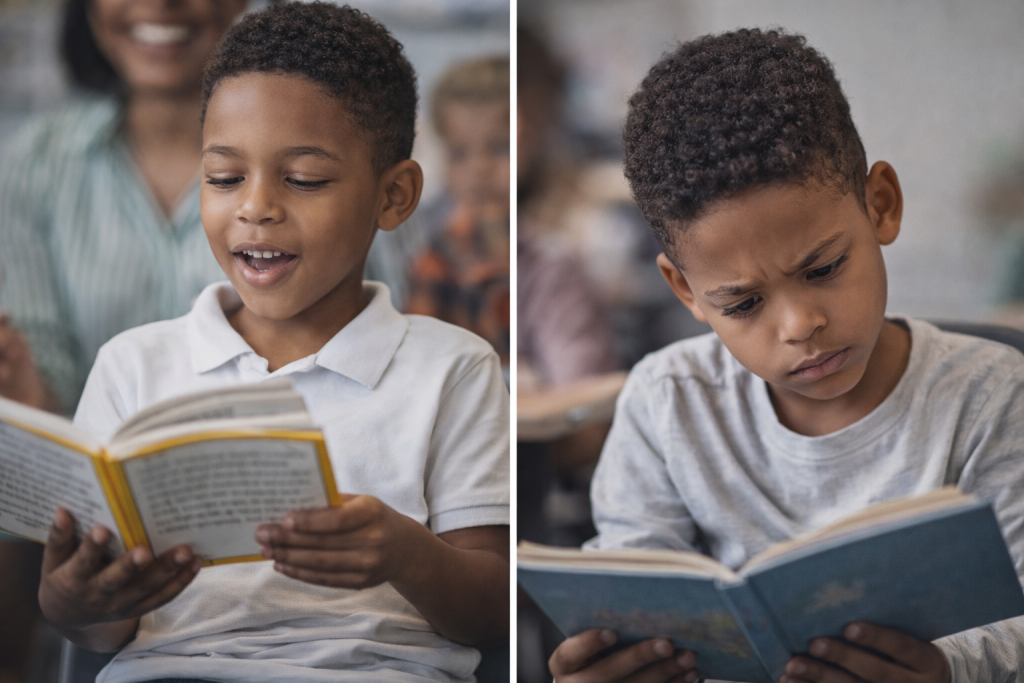
I remember a child who could read words that impressed every adult in the room. The child had clear pronunciation, a flow as smooth as silk, and confidence bold enough to walk into a war he did not understand.
“Very smart,” they said.
But one day, after he finished reading a short passage, I asked him, “What happened in the story?” He paused, looked at me, then started reading the passage again because he did not understand it.
He had learned to say the words, but not to think with them. And that is the gap many people miss.
Early reading is not the same as deep thinking
When a child reads early, we often see:
- strong memory
- pattern recognition
- repeated exposure
- guided practice
These are good, very good; I won’t tell you otherwise. But they are not the full picture of intelligence. Because real intelligence includes not just the above, but also understanding, questioning, connecting ideas, reasoning, and applying knowledge. A child can read early and still lack these. And a child can read later and develop them strongly.
So is early reading an advantage?
Yes, it can be. In fact, even if you didn’t develop the other things I’m talking about, there is still an advantage to early reading. A child who is exposed to books early, who hears language often, and who develops a love for stories is building a strong foundation. That child is not just learning to read; the child is becoming a learner. And that is a real advantage.
But there’s a catch. Much of that advantage comes from exposure and a relationship with reading, not from rushing performance to impress.
Where things go wrong
When parents begin to chase early reading as a goal, pressure enters. The goal shifts from this relationship with reading to accessing performance, and you start hearing lines like:
- “Try again.”
- “Sound it out properly.”
- “You should know this by now.”
Or it may not even be spoken but just acted. But the child feels it. And slowly, reading changes. It moves from curiosity to correction, from discovery to performance, and from connection in shared moments to pressure for the child.
I have seen children who once enjoyed books begin to avoid them, not because they disliked stories, but because reading had become a test they must pass to impress.
What actually puts a child ahead
If you want your child to truly be ahead, there’s something better to focus on: Do not just be obsessed with when they read, but rather with how they grow into reading. Because a child who is ahead is not just one who can read early. It is one who:
- understands what they read
- asks questions about it
- connects it to real life
- enjoys exploring ideas
- returns to books willingly
A child who loves reading will go further than a child who was pushed to read early for the sake of reading.
What I pay attention to instead
When I watch a child, I am not first asking, “Can they read yet?” I am watching for something else:
- Do they ask questions?
- Do they stay with a problem?
- Do they notice details others miss?
- Do they try to understand things?
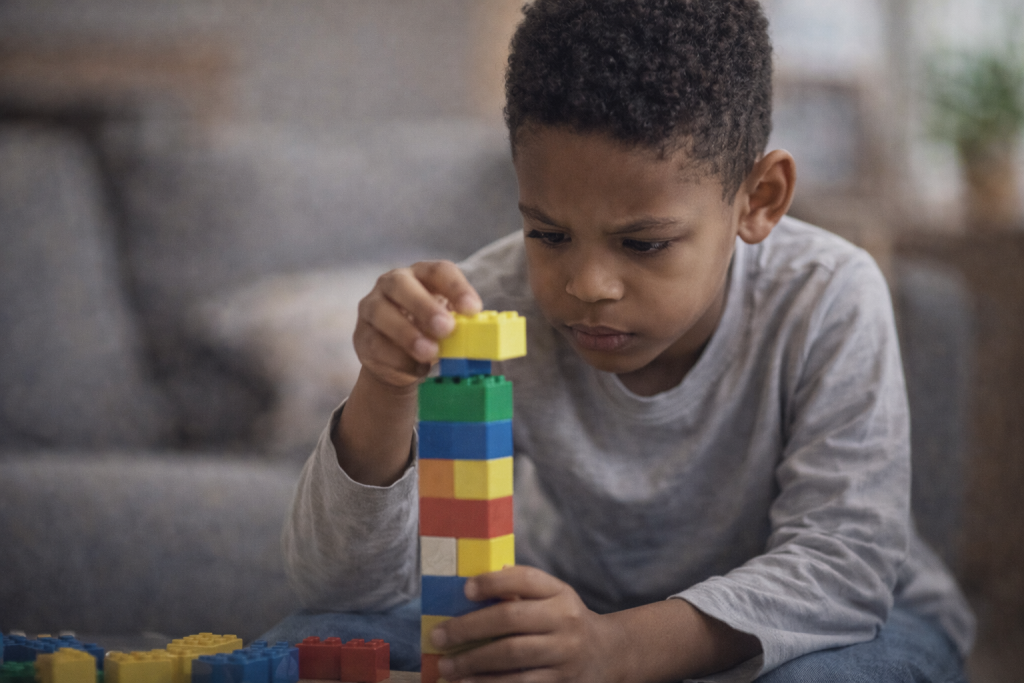
Let me give you a scenario about understanding. I remember a quiet child who did not read early. While others were focused on books, he spent time building with his bricks, stacking, adjusting, and watching.
One day, another child’s structure kept falling apart. He walked over to the struggling child, fixed one part, and said, “It needs balance.” No one had taught him that word; neither did he read it. But he understood the idea and how to use it. That is intelligence forming, and it matters a lot. It’s one of the reasons why we read to children: to be able to express themselves better with the words they learn.
So what should you do?
Do not step back from reading. Step deeper into it, but do it the right way.
- Read aloud to your child often
- Surround them with books
- Talk about stories together
- Let them ask questions
- Let reading feel natural, not forced
But don’t make it a pressure bomb. Build the relationship and routine first, and the skill will follow.
Final thoughts
A child who reads early may appear ahead, but a child who understands, thinks, and loves learning is ahead. Do not chase early performance but rather build deep development. Because in the long run, it is not the child who starts first who wins. It is the child who is well-formed and can apply knowledge to situations that ultimately wins.
If this made you pause and think, stay close. I share simple, real insights on how children grow and how to guide them without confusion or pressure.
About the Author
KC Umeh writes about how children actually develop, beyond performance, pressure, and comparison.
He helps parents understand what is really happening with their child so they can guide them with clarity, not confusion.
He is also passionate about building outstanding marriages and helps hundreds of families around the world build exceptional humans.