
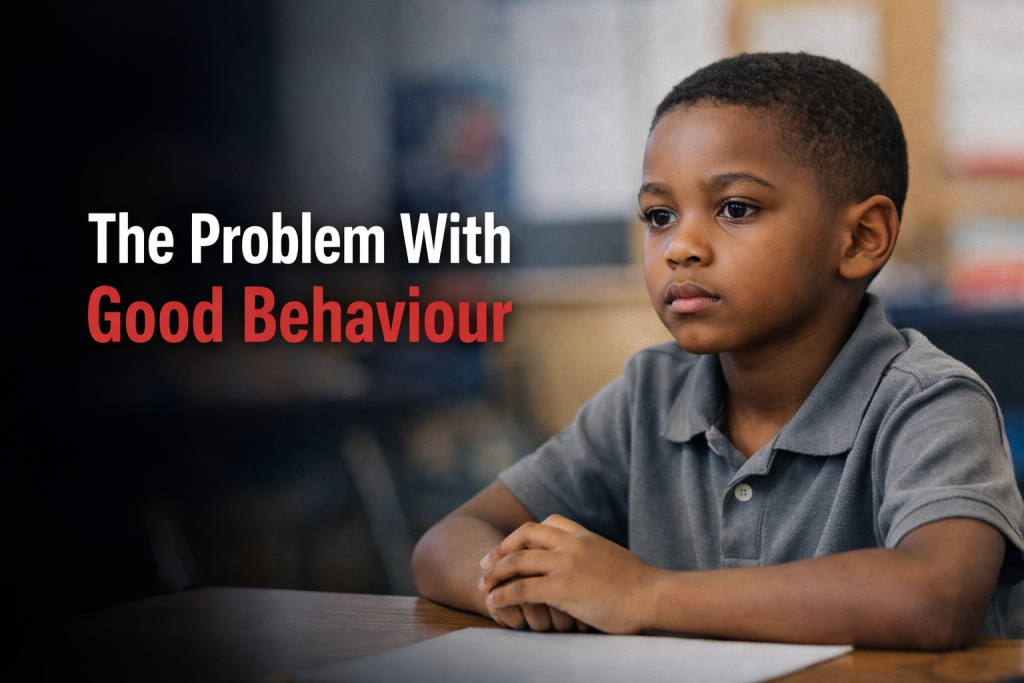
There is a kind of child that many parents and teachers secretly feel proud of.
You know the one. The child who listens quickly, who doesn’t argue. The child who sits quietly when told. The one teachers describe with a smile: “Very well-behaved.” And if we’re being honest, it feels good to hear that about your child. You feel like you’re doing something right.
Like your child is “on track.” Like you’ve figured something out that others haven’t.
But let me ask you something gently:
What exactly are we calling “good behaviour”?
When “good” becomes the goal
In many homes, behaviour is the main focus.
- “Don’t do that.”
- “Sit properly.”
- “Be nice.”
- “Stop that.”
And over time, something begins to form. Not just in the child… but in the parent too.
We start measuring success like this: Is my child easy? Is my child quiet? Does my child obey quickly?
And if the answer is yes, we relax. But there is something about behaviour, it is just what we can see. It’s actually a surface thing. And sometimes, the surface can be very misleading.
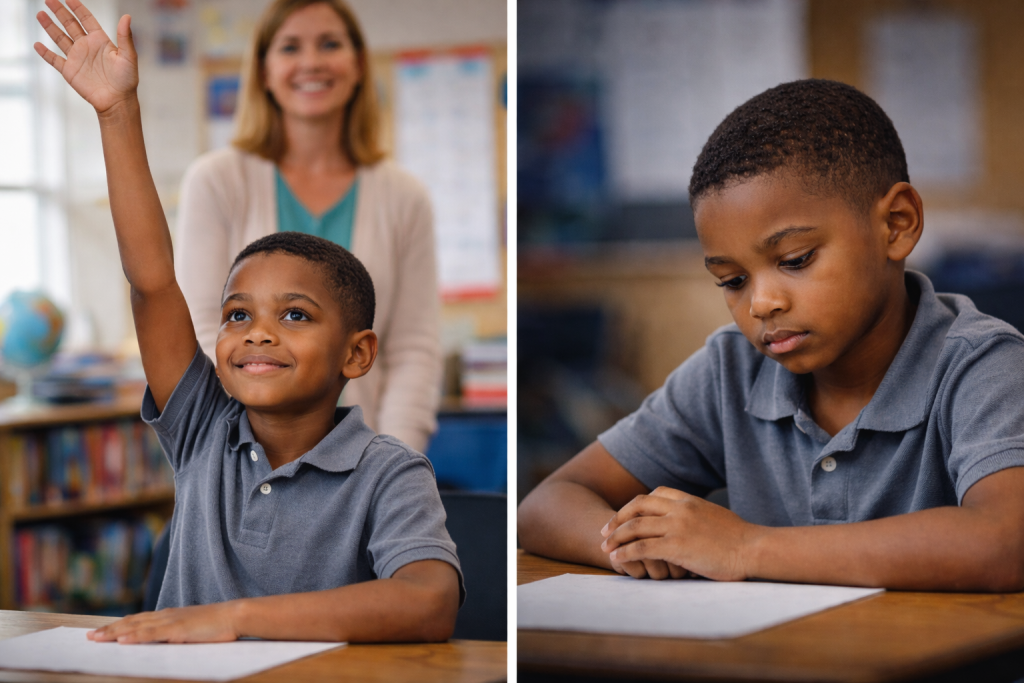
I remember a child everyone loved
Not because he was loud.
Not because he stood out.
But because he was easy.
You could tell him to sit, and he would sit right away.
Tell him to stop, and he won’t continue doing whatever it is. Tell him to wait; he is waiting. No resistance. No argument.
The kind of child that makes adults breathe easier.
“He’s such a good boy,” they would say. And honestly… I agree. Life is easier with children like that until you look a little closer.
One day, during play, another child picked up the toy he had been using. No warning, no asking, just took it like it was their birthright. I watched the boy. He didn’t react. Didn’t reach for it. Didn’t complain. Didn’t even look upset. He just adjusted and continued doing something else.
So I asked him gently, “Weren’t you playing with that? Did you want to keep playing with that?” He looked at me, gave a small shrug, and said in a melodic, soothing tone, “It’s okay.”
But I knew it wasn’t okay because his face didn’t show signs of happiness. And that was the moment something clicked for me.
The look on his face wasn’t that of peace; it was that of suppression.
What we don’t see
Children learn very quickly. Not just from what we say, but from what we reward. They reinforce what we reward. And sometimes, without realising it, we reward their silence and tell them that’s the way to go.
We reward their compliance. We reward their “not being a problem to our affairs.”
So the child learns: “Don’t complain.” “Don’t push back.” “Just be good.” And over time, something important begins to disappear: their voice. Their confidence to express themselves wanes. Their willingness to say, “I don’t like that,” is sacrificed, all in the name of being “well-behaved.”
Two children can look the same
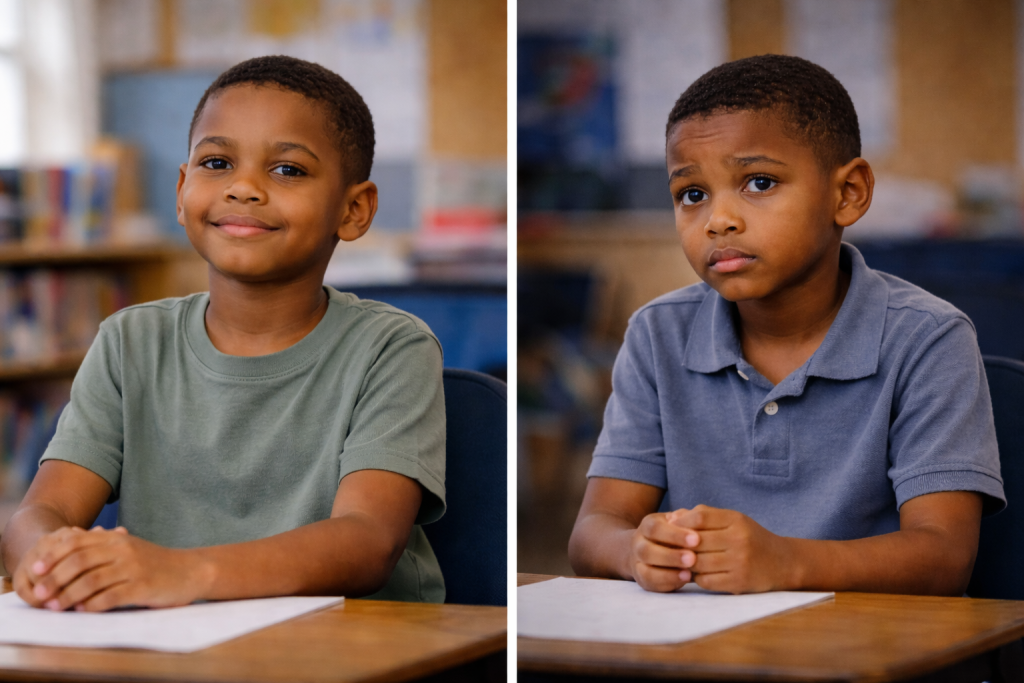
You may see two children sitting quietly in a room.
They look identical. Both are calm. Both are silent. Both are “well-behaved.”
But inside? They’re completely different. One child is calm because they feel safe. The other is quiet because they are afraid to get it wrong. One is regulated. The other is holding everything in.
And if we don’t learn to tell the difference, we may celebrate what is actually hurting the child.
The child we call “difficult”
Now think about the other child. The one who asks questions. The one who pushes back. The one who says, “No, I don’t want that.”
The one who sometimes feels like… a lot. That child is often labelled “stubborn,” “too much,” or “difficult.”
But pause for a second. What if that child is not the problem? What if that child is trying to understand? What if he’s testing boundaries? What if she’s just learning how to express herself or just figuring out how the world works?
That’s not something to shut down. That’s something to guide; that’s something to encourage.
So what should we actually be building?
Not just behaviour, though good behaviour makes our lives easier. But we should be thinking of the whole human being.
A child who can express what they feel, a child who can handle emotions with support, one who can ask questions or think through situations, and a child who can stand up for themselves when needed, even when the older ones there want to shut them up.
Because this is important: A child who only learns to obey may struggle when no one is there to instruct them. That child might be played by people who take advantage of others in the future.
What this looks like in real life
You will still correct your child. Let’s not pretend that you won’t. I am not telling you not to. You will still say, “That’s not okay,” or “Try again,” or “We don’t do that.”
But you won’t stop there. You will slow down enough to ask: “What happened?” “How were you feeling?” “What could we do differently?”
This is what makes you different from the other parents who aren’t going the extra mile. You will guide, not just control, because behaviour is not the enemy.
Behaviour is information of what the child is not loudly saying, and in fact, they are, but many times, we just misinterpret the behaviours as things that have come to ruin our peace.
To wrap it all together:
A well-behaved child may make life easier for you, but an understood, a confident, and a thinking child will go further.
So don’t just aim for quiet; don’t just aim for obedience. Aim for formation.
Because one day, your child will stand in a world where no one is telling them what to do.
And in that moment, what will matter is not how well they behaved. What will matter is how well they can think, choose, and stand.
If this made you pause and think, stay close. I share simple, real insights on how children grow and how to guide them without confusion or pressure.
About the Author
KC Umeh writes about how children actually develop, beyond performance, pressure, and comparison.
He helps parents understand what is really happening with their child so they can guide them with clarity, not confusion.
He is also passionate about building outstanding marriages and helps hundreds of families around the world build exceptional humans.